

Scanner de Funding Rate crypto
Trouvez des spreads rentables entre les funding rates sur 28+ exchanges crypto en temps réel et recevez des signaux directement sur Telegram.
Voyez exactement ce que vous obtenez en passant à l'offre payante
Vraies captures d'écran du scanner avec des données de marché en direct. Changez d'onglet, survolez les points numérotés ou agrandissez n'importe quel écran.
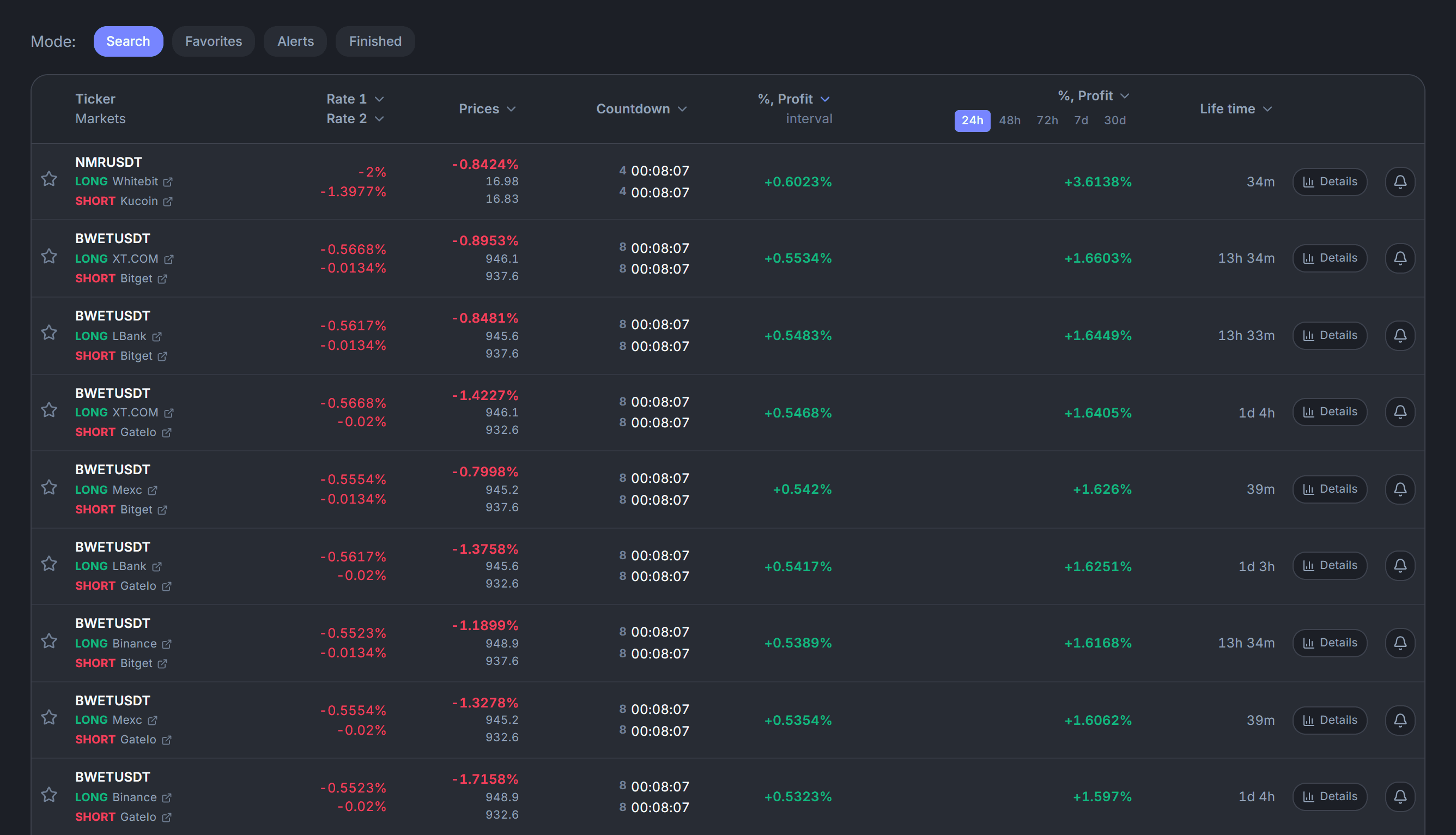
Tous les spreads de funding, classés en temps réel
Des paires sur 28 exchanges de futures, triées par le spread de taux que vous encaissez à chaque intervalle, avec un compte à rebours jusqu'au prochain paiement.
- 1Où ouvrir LONG et SHORT — un clic ouvre la position sur chaque exchange.
- 2Taux de financement actuel de chaque jambe.
- 3Temps restant avant le prochain paiement de funding et intervalle des paiements.
- 4Votre spread de funding par intervalle et le rendement prévu de 24 h à 30 jours.
- 5Ouvrez l'analyse de la paire, ajoutez-la aux favoris ou créez une alerte.
Combien l'arbitrage de funding peut-il rapporter ?
Revenus de funding purs — sans spread de prix. Déplacez les curseurs pour estimer une position delta-neutre ; dans la version payante, chaque paire est fournie avec ses taux en direct.
- Taille de position par jambe
- 2 000,00 USDT
- Revenus de funding (21 paiements)
- +42,00 USDT
- Frais de trading
- −4,00 USDT
- Annualisé (APR)
- +99,07%
Estimation indicative : suppose que le spread de funding reste constant sur toute la période. Les taux changent à chaque intervalle ; les résultats réels dépendent du marché, de la liquidité et du slippage. Ce n'est pas un conseil financier.
Qu’est-ce qu’un funding rate ?
Un funding rate est un paiement récurrent échangé entre traders dans les contrats de futures perpétuels. Le mécanisme maintient le prix perpétuel proche du prix spot de l’actif sous-jacent. Lorsque les prix divergent, l’exchange utilise le funding pour inciter économiquement les traders à rééquilibrer le déséquilibre.
Comment fonctionnent les funding rates ?
Le funding est prélevé ou payé à intervalles réguliers, le plus souvent toutes les 8 heures.
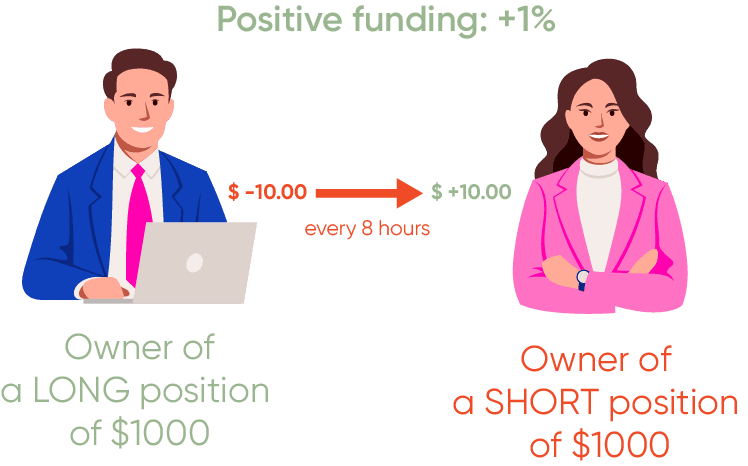
Funding positif
Le prix des futures est au-dessus du spot, donc les positions LONG paient les positions SHORT.
ℹ Avec un funding positif, LONG paie SHORT.
Comment gagner avec le funding ?
Le scanner P2P.Army suit la différence (spread) entre les funding rates des exchanges 24h/24 et envoie des opportunités prêtes directement sur Telegram.
Risque minimal
Vous ouvrez des positions de futures opposées en même temps — elles compensent mutuellement le mouvement du prix. Tant que le spread de funding reste positif, vous percevez un paiement à chaque intervalle de funding.
Exemple : spread +0,4811% sur un intervalle de 8h = +10,1% en 7 jours sans levier. Avec un levier 10x — jusqu’à +101% par semaine.
Fonctions du scanner de funding
Surveillance 24/7
Le scanner suit en continu les funding rates et trouve les spreads entre exchanges en temps réel.
28+ exchanges de futures
Les plus grands exchanges de futures perpétuels réunis dans un scanner pratique.
Graphiques de spread
Dynamique détaillée de chaque paire avec l’historique complet des accruals de funding.
Historique de funding
Données ventilées par intervalle — analysez le spread à chaque étape.
Alertes Telegram
Les signaux sur les nouveaux spreads, mouvements de prix et baisses de taux arrivent instantanément.
Stratégie delta-neutre
Les positions opposées compensent le mouvement du prix — vous gagnez sur le spread de funding.
Alertes Telegram en temps réel
Personnalisez le bot selon vos besoins et recevez des signaux instantanément.
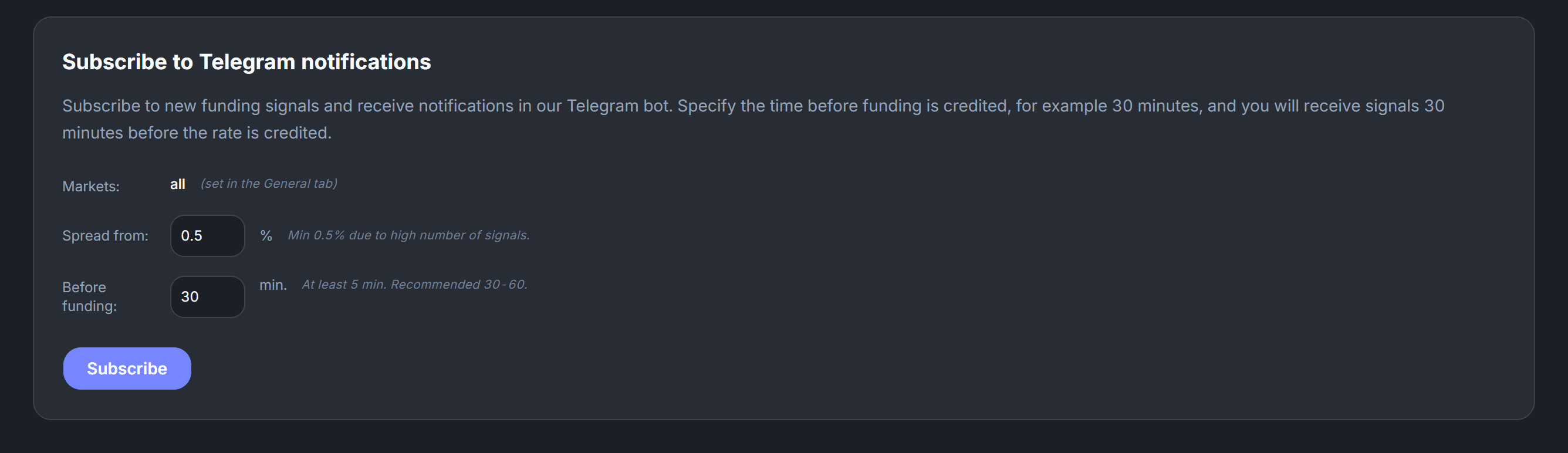
Abonnez-vous en quelques clics : choisissez le spread minimum et combien de temps avant le funding vous prévenir.
Futures+Futures:
🟠
BWETUSDT-0.55% Binance (LONG)-0.02% Bitget (SHORT)Spread
+0.53% in 7 minutes.More
🟠
STONKUSDT+0.01% Bitget (LONG)+0.46% MEXC (SHORT)Spread
+0.46% in 7 minutes.More
/disable_funding_signals - Disable these notifications
Settings on P2P.Army15:53
The funding rate spread has dropped below your
+0.1000% alarm.Markets:
Binance (LONG)
Bitget (SHORT)
Ticker:
BWETUSDTCurrent Funding rate spread:
+0.0842%More about BWETUSDT18:02
Change in asset price by
+12.45%Markets:
Binance (LONG)
Bitget (SHORT)
Ticker:
BWETUSDT⚠️ Price change:
+12.45%Was:
949Became:
1 067More about BWETUSDT21:37
Revue vidéo du scanner de funding
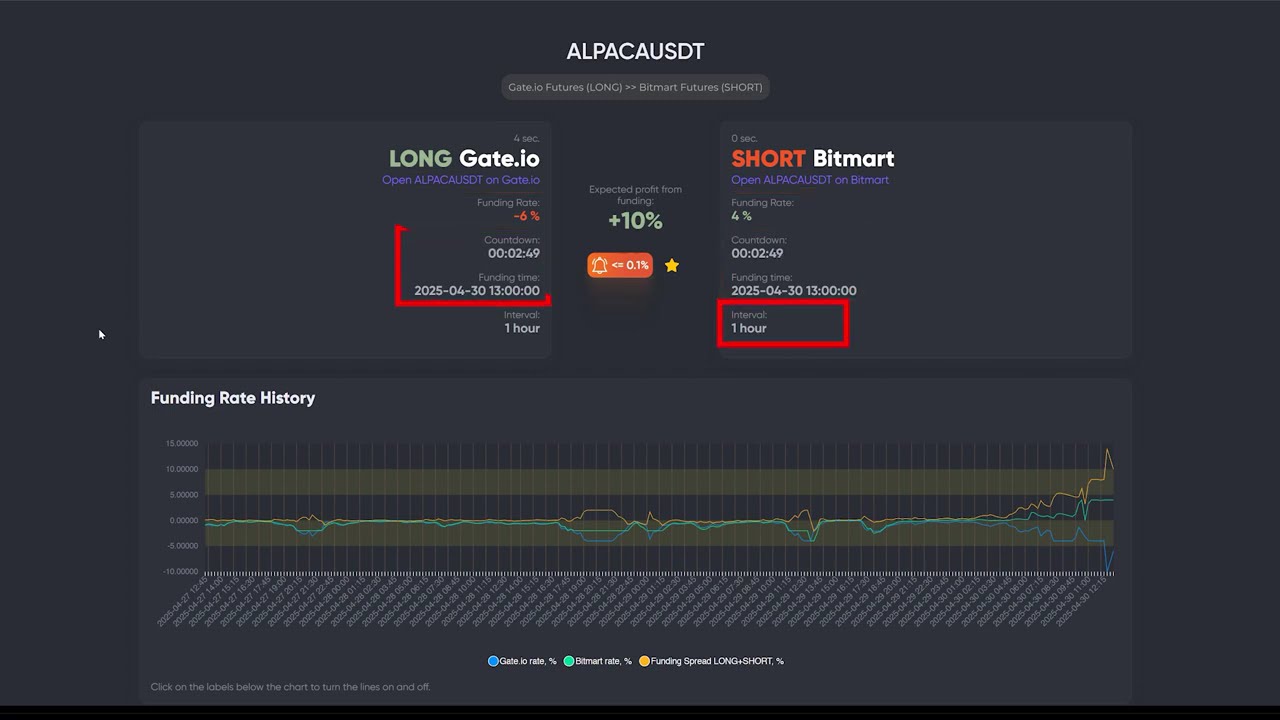
Tout ce que vous obtenez avec l'offre payante
L'offre DEX/CEX ou Ultimate débloque le scanner de funding complet avec tous les outils présentés ci-dessus.
Obtenir l'accès complet- Tableau en direct des spreads de funding sur 28 exchanges (13 DEX)
- Compte à rebours avant chaque paiement et rendement prévu de 24 h à 30 jours
- Filtres par exchange, profit et délai avant le funding
- Analyse de la paire avec un graphique sur 72 heures des deux taux
- Historique du funding, règlement par règlement
- Calculateur de profit et guide pas à pas pour chaque paire
- Alertes de spread et de prix sur Telegram
- Signaux Telegram pour les nouveaux spreads avant le funding, favoris
Arbitrage de funding sur 28 exchanges de futures
 ApeX Omni FuturesDEX
 Aster FuturesDEX
 Binance Futures
 BingX Futures
 Bitget Futures
 BitMEX Futures
 Bybit Futures
 Deribit Futures
 dYdX v4 FuturesDEX
 EVEDEX FuturesDEX
 Extended FuturesDEX
 GateIo Futures
 HTX Futures
 Hyperliquid FuturesDEX
 Kucoin Futures
 LBank Futures
 Lighter FuturesDEX
 Mexc Futures
 Okx Futures
 Ondo Perps FuturesDEX
 Orderly FuturesDEX
 Pacifica FuturesDEX
 Paradex FuturesDEX
 Poloniex Futures
 Reya FuturesDEX
 Variational FuturesDEX
 Whitebit Futures
 XT.COM Futures
Questions fréquentes
Un funding rate est un paiement périodique utilisé dans les contrats de futures perpétuels pour maintenir leur prix proche du prix spot de l’actif sous-jacent. Comme les futures perpétuels, contrairement aux contrats traditionnels, n’ont pas de date d’expiration, les funding rates aident à équilibrer la différence de prix (« spread ») entre le prix spot et celui des futures.
Lorsque le funding rate est positif, les traders détenant des positions LONG (achat) paient les traders détenant des positions SHORT (vente).
Lorsque le funding rate est négatif, les traders détenant des positions SHORT paient les traders détenant des positions LONG.
Dans le trading de futures crypto, « Long » et « Short » représentent deux positions de base :
- Position LONG : Un trader ouvre une position LONG s’il s’attend à une hausse du prix de l’actif.
- Position SHORT : Un trader ouvre une position SHORT s’il s’attend à une baisse du prix de l’actif.
Les deux approches permettent aux traders de profiter des fluctuations de prix, quel que soit le sens du marché.
- Toutes les 8 heures (l’intervalle le plus courant)
- Toutes les 4 heures
- Toutes les 2 heures
- Toutes les 1 heure
Le funding rate est prélevé strictement à l’heure désignée. Donc pour recevoir le taux, il suffit d’ouvrir une opération même 1 minute avant le règlement.
Le scanner P2P.Army vous permet de vous abonner aux nouveaux signaux, et vous recevrez un rappel avec une liste de spreads, par exemple 15-30 minutes avant le règlement, pour avoir le temps de préparer vos positions et ne pas manquer l’heure du funding.
- Entrée à long terme dans des positions pour percevoir le taux sur une longue période. Parfois un spread positif peut persister des jours, des semaines, voire des mois. Généralement, après être entré dans une position à long terme, le trader configure des alertes pour la fermeture du spread du taux. Dès qu’il reçoit la notification que le spread s’est fermé, il sort de la position et cherche de nouveaux spreads.
- Entrée courte dans des positions uniquement pour percevoir le taux quelques minutes avant le règlement. De telles opérations peuvent durer 5 à 15 minutes. L’objectif principal est d’ouvrir des positions LONG et SHORT, de percevoir le taux et de sortir.
