P2P Arbitrage Risks: Account Freezes, Chargebacks, Third-Party Payments and Scams
The USDT rate to local currency usually moves smoothly, and money in P2P is lost elsewhere: to scammers, chargebacks and bank account freezes. We look at how it happens, how to reduce the risk and what to do if your account is frozen anyway.

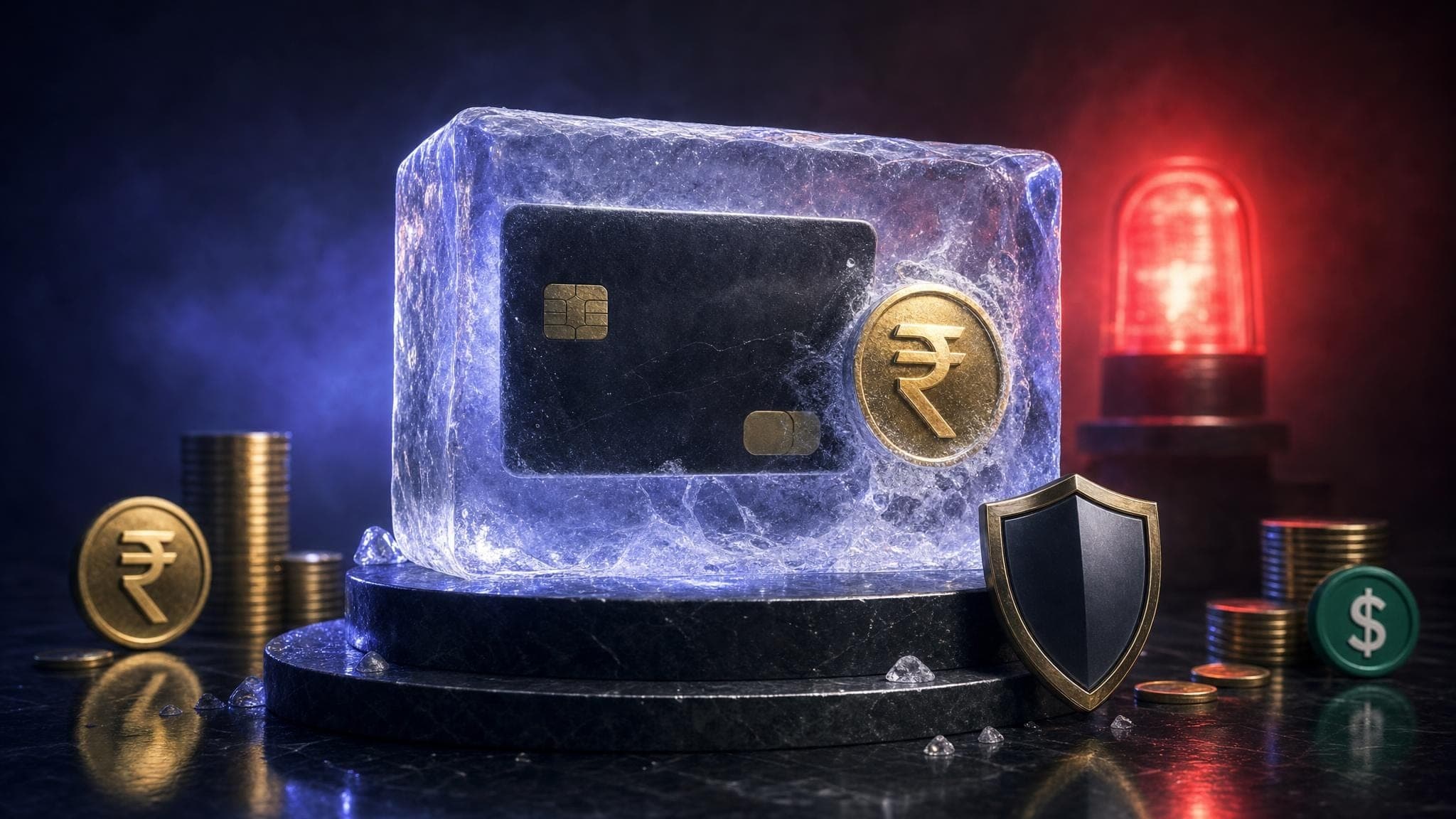
Price risk in P2P arbitrage is usually small: the USDT rate to local currency moves smoothly, and a round of trades takes minutes. Money is lost elsewhere — to scammers, chargebacks and bank account freezes. The mechanics of these risks are similar in every country; only local banks, laws and authorities differ.
Bank account freezes
A scammer deceives a victim — selling a non-existent product, “investment” or “job” — and asks them to send money. Then the scammer opens a P2P order to buy USDT and passes the seller’s bank details to the victim. The victim pays the seller directly, the seller releases the coins, and the scammer withdraws the crypto. When the victim realizes they were deceived, they file a complaint, and the money trail leads to the seller’s account.
- 1
Complaint
The victim goes to the police, a cybercrime unit or the bank. - 2
Tracing
Investigators and banks trace the transfer through the chain of receiving accounts. - 3
Request to the bank
The seller’s bank receives a request and freezes the account — fully or for the disputed amount. - 4
Proceedings
The seller has to prove they honestly sold crypto — and wait for a decision.
Besides complaints, banks monitor unusual activity themselves: frequent incoming payments from different people and quick onward transfers can trigger reviews and restrictions under anti-money-laundering rules.
Chargebacks
A chargeback is recalling a payment through the bank or payment system. It is possible for cards and some e-wallets. The scheme is simple: the buyer pays by card, receives the USDT and disputes the payment. The money goes back to them, and you are left with neither the money nor the coins. That is why P2P traders choose methods where the payment cannot be recalled (lesson 5).
Scams
| Scheme | What it looks like | What to do |
|---|---|---|
| Third-party payment | The payer’s name does not match the counterparty’s KYC name — it may be a victim promised a product or service | Do not release USDT. Open an appeal and return the money to the payer through exchange support |
| Fake confirmation | A screenshot, SMS or transaction number in chat, while nothing arrived in the account | Check the credit only in your own banking app |
| Chargeback | The buyer pays by card or via a service with payment reversal, then disputes it | Do not accept methods where the payment can be recalled |
| Off-platform deal | “Let’s do it directly, it’s faster”, “message me on a messenger” | Never: without escrow you have no appeal protection |
| Pressure and rush | Demands release before the money arrives, threatens bad feedback or a complaint | Feedback is not worth lost USDT. Under pressure — appeal |
| Refund “by mistake” | Sent more and asks to return the difference to another account | Refund only through exchange support and only to the original account |
Exchange risk
The exchange holds your coins while they sit on its balance. A hack, a technical failure or a regulator’s decision can temporarily stop deposits and withdrawals — on October 29, 2026, after a hot wallet hack, Binance suspended all deposits and withdrawals (our news). Keep no more on the exchange than your turnover needs, and enable 2FA.
How to reduce risk
- Counterparty filter. In the P2P.Army order book builder and signals, set a minimum number of orders and completion rate — this course uses “100+ orders and 95%+”. For large amounts you can keep merchants only.
- Payer name = KYC name. Any mismatch is a reason not to complete the trade.
- Methods without payment recall. Avoid cards and services with chargebacks.
- A separate account for P2P. Keep salary and savings in another account, preferably at another bank.
- Do not let money pile up in the P2P account. Withdraw profit regularly: whatever sits in the account is what gets frozen.
- Spread your turnover. Several trusted counterparties are better than one large trade with a stranger.
- Blacklist. In the P2P.Army signals table, the “BL” button sends a merchant to your blacklist in one click.
A record of every trade
If your account is frozen, you will have to prove things with documents. Save them right away:
- the exchange order number and a screenshot of its page;
- the order chat;
- the bank statement and the transaction number of the payment;
- the counterparty’s KYC name and the payer’s name in the bank;
- proof that USDT was released only after the money arrived.
If your account is frozen
- 1
Written request to the bank
Find out who imposed the restriction and on what basis: which authority, the complaint or case number, the disputed amount. - 2
Contact the authority
Reach the named unit and hand over the trade documents: order, chat, statement, the counterparty’s KYC name. - 3
Exchange appeal
Tell the exchange about the freeze on a completed order — major exchanges have a procedure for such cases. - 4
Lawyer
If the amount is significant or the bank does not respond, contact a lawyer who handles such cases in your country.
Your country
Account freezes and fraud schemes depend on local banks and laws. Pick your country to see its specific risks.
Choose your country — we will remember it for next time.
 IndiaINRP2P Arbitrage in India: Payment Methods, Taxes and Exchanges with INR
 VenezuelaVESP2P Arbitrage in Venezuela: Pago Móvil, the BCV–USDT Gap and Taxes
 PakistanPKRP2P Arbitrage in Pakistan: Payment Methods, Regulation and Exchanges with PKR
 BangladeshBDTCrypto P2P in Bangladesh: Legal Status, bKash and Nagad Rules, Risks
 NigeriaNGNP2P Arbitrage in Nigeria: Payment Methods, Taxes and Exchanges with NGN
 VietnamVNDP2P Crypto in Vietnam: The Pilot Market, 0.1% Tax and Account Freeze Risks
 UkraineUAHP2P Arbitrage in Ukraine: monobank, Transfer Limits and Crypto Taxes
 RussiaRUBP2P Arbitrage in Russia: The Crypto Law, Taxes and Card Blocks Under 161-FZ
 IndonesiaIDRP2P Crypto Arbitrage in Indonesia: OJK Rules, Taxes and the Risk of Blocked Bank Accounts
 Saudi ArabiaSARP2P Crypto Trading in Saudi Arabia: Legal Status, Transfers and Risks
 PhilippinesPHPP2P Crypto in the Philippines: GCash, Licensed Exchanges, Taxes and Risks
 ArgentinaARSP2P Arbitrage in Argentina: Crypto Dollar, Mercado Pago, PSAV and ARCA
 KenyaKESP2P Arbitrage in Kenya: M-PESA, Taxes and Exchanges with KES
 ColombiaCOPP2P Arbitrage in Colombia: Nequi, Bre-B, DIAN Taxes and Risks
 EgyptEGPP2P Crypto Trading in Egypt: Legal Status, InstaPay Limits and Risks
Frequently asked questions
Why can a bank freeze my account after I sell USDT?
Most often because the money you received is linked to a fraud victim’s complaint, or the bank noticed unusual activity. Ask the bank in writing who imposed the restriction, the complaint number and the disputed amount.
How do I avoid a freeze?
You cannot eliminate the risk completely, but you can reduce it: trade with counterparties who have a long history, accept money only from the KYC account holder, keep a separate account for P2P, withdraw profit regularly and keep a record of every trade.
Can I accept payment from the buyer’s friend or relative?
No. A third-party payment is the main sign of a fraud scheme. Do not release the coins, open an appeal and return the money to the payer through exchange support.
Sources
- 1.Binance P2P in India: Why Sellers Risk Bank Account FreezesCoin Edition9/5/2026official
- 2.National Cyber Crime Reporting PortalMinistry of Home Affairs, Government of India
- 3.P2P.Army: P2P order book builderP2P.Army10/30/2026
About the author

Crypto expert, arbitrage trader and investor
Crypto expert and hands-on crypto arbitrage trader, investor and software developer with over 20 years of experience. On the P2P.Army blog he covers exchange news, P2P and cross-exchange arbitrage.
- Crypto arbitrage
- P2P arbitrage
- Cross-exchange arbitrage
- Crypto exchanges
- Investing
- Software development